

I’ve been writing-to-predict and writing-to-translate ways to bring forward a more biological future in the past months. The topics are a seeming stream of consciousness of tech/ biotech/ automation/ AI:
The importance of biotech’s building a narrative to get mindshare
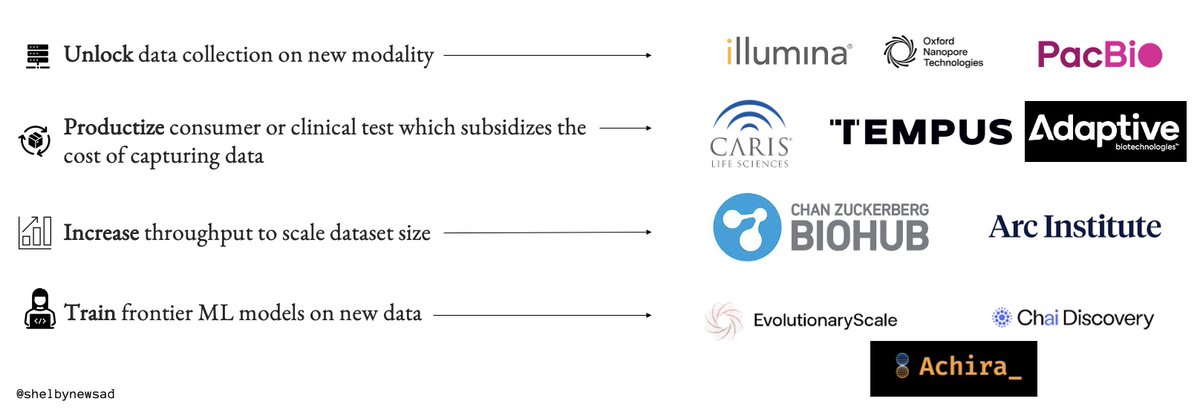
Thoughts on how new data measurement tech could be commercialized
The rising importance and opportunity on consumer diagnostics
Biotech-enabled hedonism
Lab automation business models
Self-replicating drugs, and
Cheap efficacy readouts in clinical trials with human challenge trials (HCTs)
While these are all discrete, unrelated ideas, they are all unified in predictions of how biotech will change, improve, transform, and proliferate in the future. Biotech of the future will be much closer to consumers vs. mediated through doctors and this opens up potential for entirely new markets and use-cases. Not only this but internets worth of biological data could create opportunities for true OpenAI/Anthropics of biotechs to emerge with real, compounding data defensibility. What this means is that biotechs of the future will do customer research on our habits, our biology, how we doctor through our computer vs. at an office, and will make new products seem cool (with strong narrative building). During this seismic shift, hopefully we will make new mistakes, not avoidable ones, by studying histories of companies that have come before.
These different ideas, hacks and histories were initially shared in the form of tweets (mostly) and a Twitter blog post. I’ll keep experimenting with new ideas there first but want to translate the most interesting ones to Substack to consolidate these and find others thinking similarly!
How to advance your biotech narrative…. and the risk of not. Company validation in biotech can take many years to prove out. Company narrative proliferation can be built while you’re validating the core thesis. While this is unnatural to many scientists, it’s a core part of how to get investor, hire, and customer mindshare. Making sure you’re focusing on company narrative to make sure you can validate your thesis is relatively easy. I lay out a playbook below in this tweet of all of the different axes from blog posts, to podcasts, to launch parties that can be helpful in letting the world know what you’re doing to give you the best fighting chance of success.
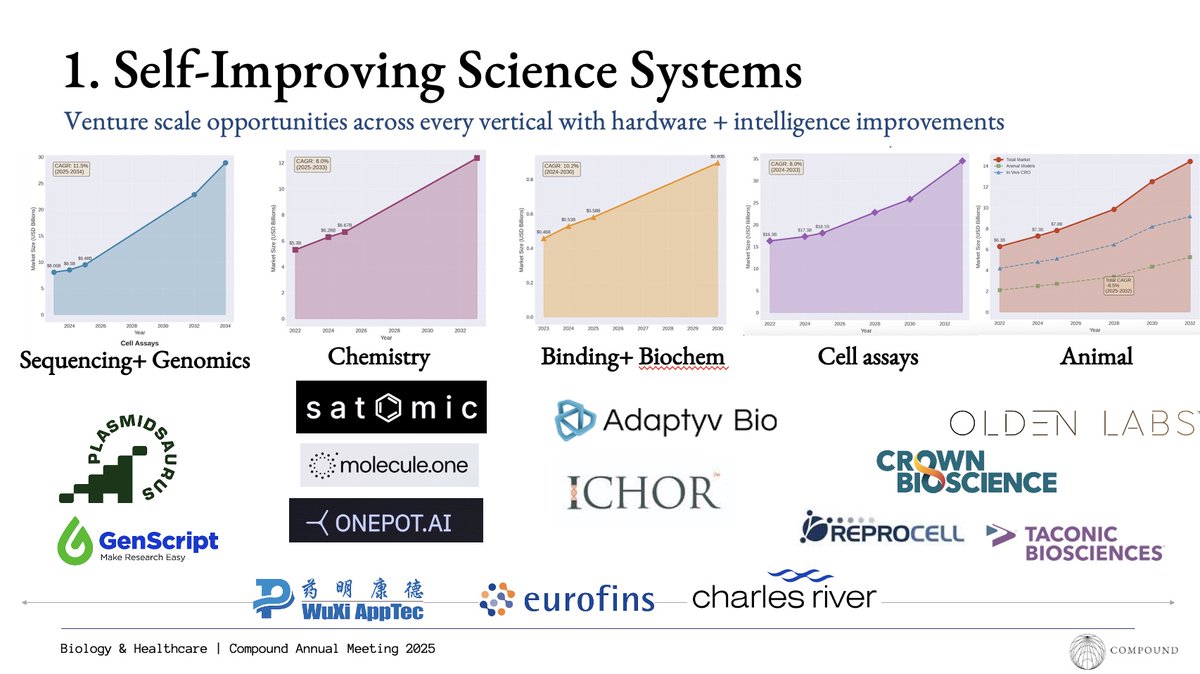
Better science infrastructure vs. hardware sales. Bio automation goes in and out of fashion. With each wave there’s companies on the software layer, coordinating, metadata, hardware, and services sales. Each of these business has benefits and pitfalls. The benefits of the software layer include fast and broad distribution, ability to work with many different instruments, but defensibility can be limited and normally have lower contract values. Selling hardware is difficult because you need to be selling into companies that are just building out their lab or have fresh spend for their automation. This is hard in times (like these) where Series A & B funding has been scarce. Hardware can really change lab processes and increase scale and complexity of experiments, however. Selling (automated) services is another option which seems to be the highest ROI where after upgrading synthesis, binding, cell or animal assays, you can show this to customers who will have faster turnaround, higher scale of data, and higher data granularity. Software and Services are the only verticals that have short-term and feasible network effects from protocol sharing/fast distribution (software) or from having a 10x service which routes everyone to your platform. We believe there are venture scale markets on every layer of preclinical R&D and that the future of experimentation looks more centralized.
 ·
· The category defining potential of a reading new biological modalities (eg. proteins, metabolome, etc). I’ve been compelled by net new data for years and as frontier labs continue to pay for net new data, there are two divergent options. Work as a bio Mercor for the foundation labs, or build your own on your patented and proprietary data and build models on top of that. I’m most interested in startups doing the latter and innovating on structures of science translation from verticalizing into diagnostics, scaling data collection, and training proprietary frontier models on the equally proprietary data source.
 ·
· What is different if a biotech is made for reversing the effects of vices? Put another way, what if the future of society doesn’t simply stop us from eating one more donut or give us mental fortitude to go to our exercise class, but allow us all the benefits even though we’re smoking, drinking alcohol, playing video games. While dystopic, many signs point towards this future.
Why do net new diagnostics for consumers matter? Consumer diagnostics don’t suffer from scale issues of brick and mortar clinics like Forward and Neko and can provide new, highly important information. Infection history, proteomic signature, forever chemical concentration are a few examples of what the future of consumer health looks like. Paired electronic health record (EHR) data with biomarkers could forge a Tempus like business model of front-end diagnostics and back-end sales.
 ·
· Self-amplifying drugs are a big step in modality improvements. Studying the history of biologics, gene therapies and basically any new modality shows that first forms are not the most potent and safest forms of new modalities that end up transforming markets. Self-amplification is one of the many steps of establishing and optimizing mRNA as a massive emerging modality.
Dr. Shelby@shelbynewsad(new thesis) self-amplifying drugs Healthy humans are a wonder. Their bodies sense danger (viruses, cancer, bacteria), kill danger, develop from fetus to adult, repair wounds, and so much more. Healthy bodies should be the standard for what drugs of the future look like. Drugs · 1 Reply
Human challenge trials - eg. the value of making a healthy person sick and then well again. This is one of the cheapest ways to get human efficacy data. Historically human challenge trials have been for infectious disease but new companies are proposing them for muscle and bone wasting disease, modeled with human space flights.
As always, would love to speak to anyone thinking about these ideas. I’m at [email protected].